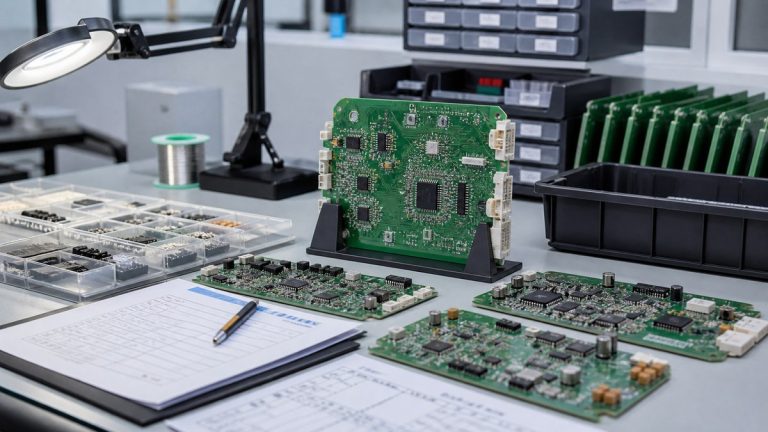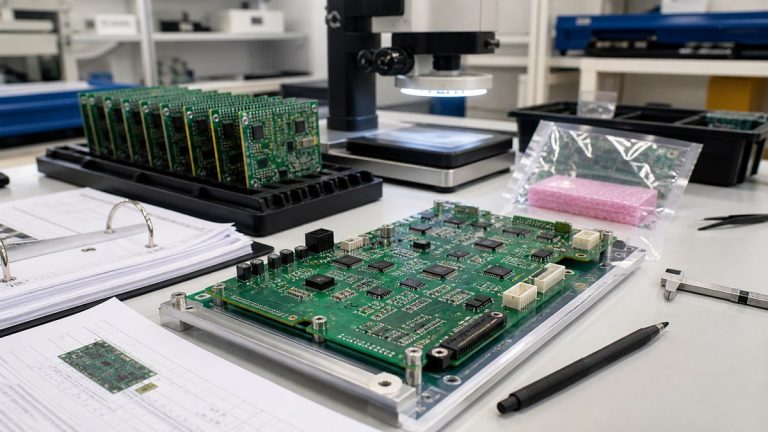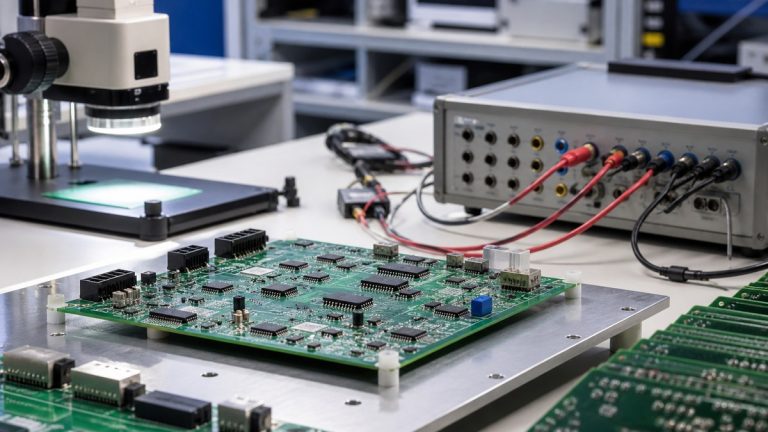
We use SPI, AOI, X-ray and applicable electrical or functional testing to control different automotive PCBA risks. We do not treat one machine or one final test as proof of the entire assembly. Our engineers build the coverage route from the product design, package mix, process risks, test access and customer acceptance requirements.
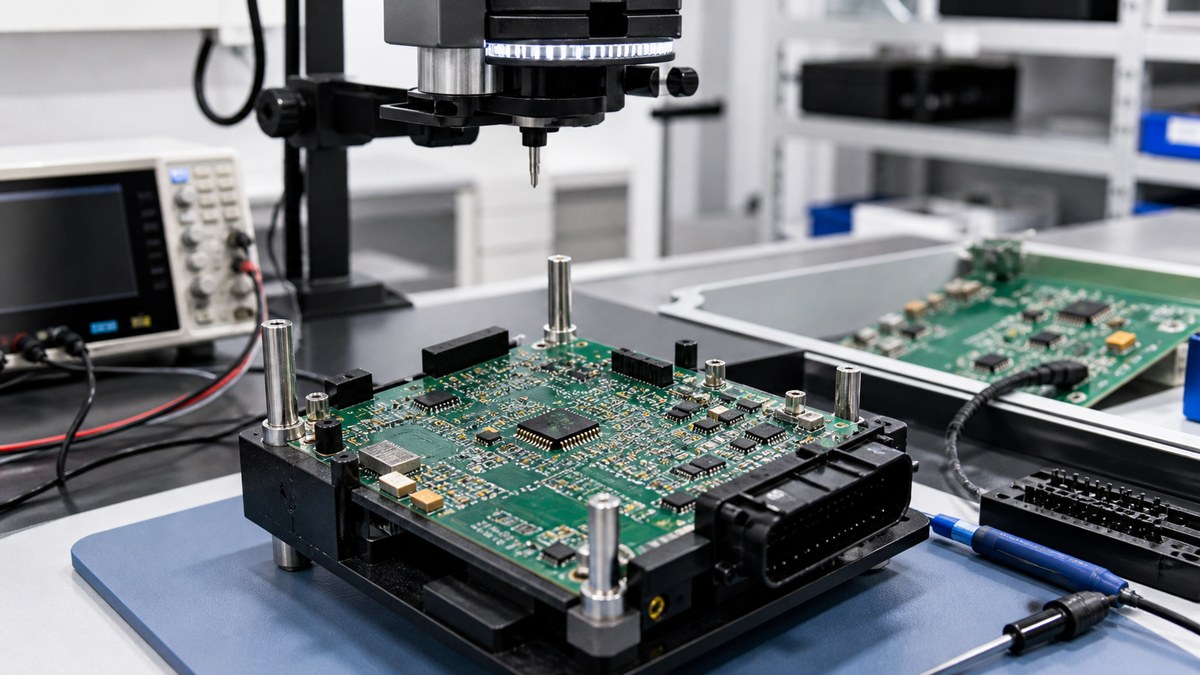
You receive a coverage plan that explains what each method can detect, when it is used, how failures are handled and which results remain connected to the product. This gives your quality team evidence of the actual build rather than a general equipment list.
How Our Inspection and Test Methods Work Together
| Method | Risk it addresses | Evidence |
|---|---|---|
| First article | Wrong setup, revision, part or orientation | Approved first-article result |
| SPI | Paste volume, area, height and alignment conditions | Process result linked to the production route |
| AOI | Visible placement, polarity and solder conditions | Inspection result and disposition |
| X-ray | Selected hidden joints such as BGA and QFN | Applicable image or inspection result |
| ICT or flying probe | Accessible connectivity and component-level conditions | Program revision, result and failure record |
| FCT | Specified powered behavior | Procedure, firmware, limits and result |
We Begin With a Product Risk Map
Our review identifies fine-pitch printing, bottom-terminated packages, polarity-sensitive parts, high-current joints, connectors, programmed devices, safety-related interfaces and functions that cannot be verified visually. We also review customer-specific workmanship and reporting requirements.
Each risk is assigned prevention, inspection or test coverage. If no practical method covers an important condition, we raise the gap before production instead of allowing a late test to carry an unrealistic expectation.
First-Article Verification Protects the Released Setup
We verify that machine data, material identity, placement, orientation, tooling and the applicable product revision match the approved package before normal production continues. A first article is especially important after a new setup or controlled change.
The result records the approved condition and any issue that required correction. It does not replace ongoing process control, but it prevents a setup error from being repeated across the lot.
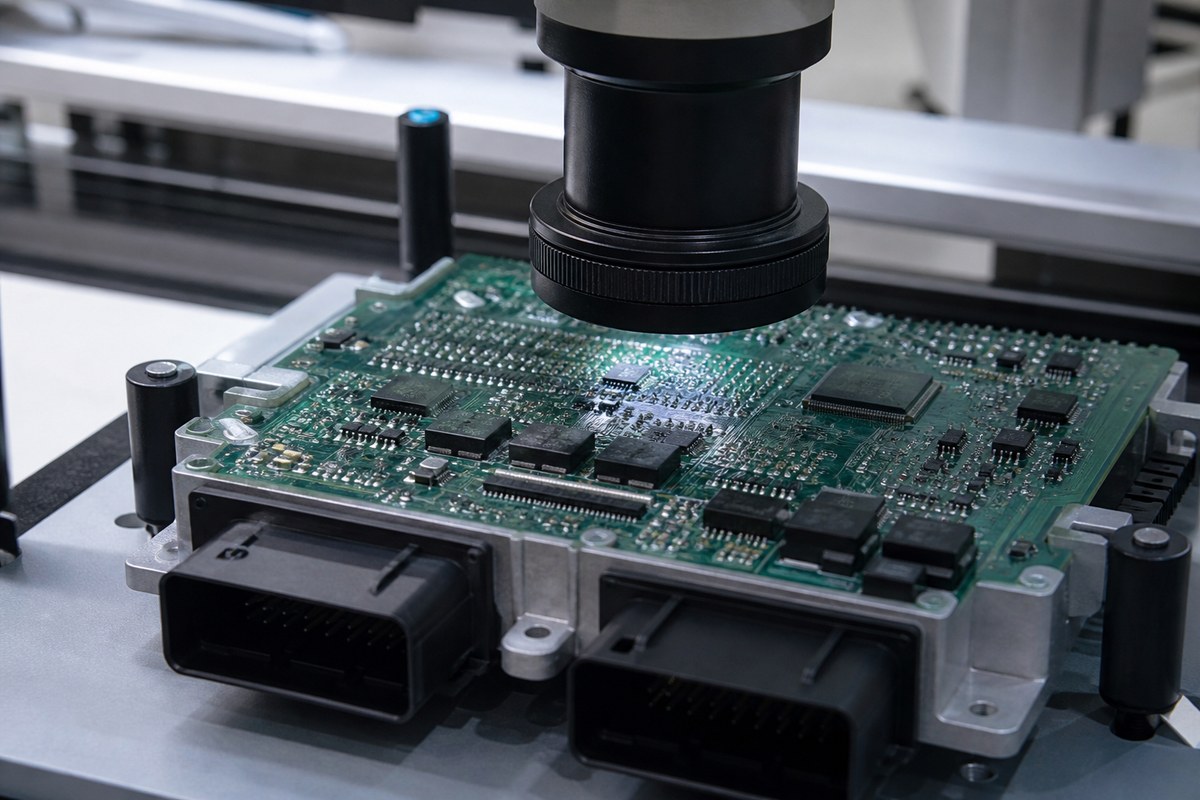
SPI Controls Solder Paste Before Placement
Where included in the route, SPI checks solder-paste conditions before components hide the deposits. It can identify insufficient, excessive, shifted or inconsistent printing conditions according to the programmed criteria.
We use the result as an upstream process signal. Reaction rules identify when printing must be corrected and how affected panels are controlled.
AOI Covers Visible Assembly Conditions
AOI checks applicable component presence, position, polarity and visible solder conditions. The program is prepared for the released product and evaluated against the approved acceptance basis.
AOI cannot reliably see every hidden connection or prove electrical function. We combine it with the other methods required by the assembly risk.
X-ray Provides Evidence for Selected Hidden Joints
We use X-ray where BGA, QFN or other bottom-terminated components create hidden-joint risks. The plan identifies the relevant locations, defect conditions, sampling or unit coverage, acceptance criteria and required image output.
Full-board X-ray is not automatically the best choice for every PCBA. We apply it where it produces meaningful evidence and use electrical or functional tests for questions an image cannot answer.
ICT and Flying Probe Depend on Design Access
ICT or flying-probe testing can check applicable connectivity and component conditions when the design provides suitable access and the test strategy supports the expected volume. Our engineers review test points, isolation constraints, fixture needs and program ownership before confirming coverage.
The result remains linked to the product, program revision and disposition. Failed units follow controlled diagnosis, repair and retest.
Functional Testing Proves Only the Functions We Define
FCT verifies powered behavior under the procedure, firmware, interfaces, loads and limits agreed for the product. We review fixtures, cables, golden samples, software versions and report needs before production.
A short power-on check is not equivalent to a complete vehicle-level validation. We state the tested functions and boundaries clearly so your team knows what the record proves.
Failures and Repairs Remain in the Evidence Chain
When an inspection or test fails, we contain the affected product and record the issue, disposition, approved repair or rework, verification and final result. Serial-number or work-order links support retrieval where included.
This gives your team visibility into both first-pass and final status instead of hiding repaired units behind a final pass field.
Why Automotive Customers Use Our Coverage Planning
We connect each method to a defect or functional risk and keep the result tied to the released assembly. Your team can see why the method is used, what it covers and how exceptions are controlled.
This reduces blind spots, unnecessary testing and false confidence from a machine list.
Send Your Automotive PCBA Test Requirements
Send your Gerber, BOM, CPL, assembly drawing, component-package list, workmanship criteria, critical characteristics, test access, procedure, firmware, limits, fixture information, quantities and report format to sales@ebestpcba.com.
We will return the proposed inspection and test coverage, required customer inputs and evidence available for the build.