Skip to content
Home / Capabilities / Box Build

FINISHED-PRODUCT ASSEMBLY AND TEST CAPABILITIES

Box Build Assembly and Testing Capabilities for Finished Electronic Products

Confirm the product size, assembly controls, test records, and release requirements before placing an order. The final scope is based on approved drawings, firmware, test limits, and packaging specifications.

First response target: within 24 hours. Capability and lead time are confirmed after file review.

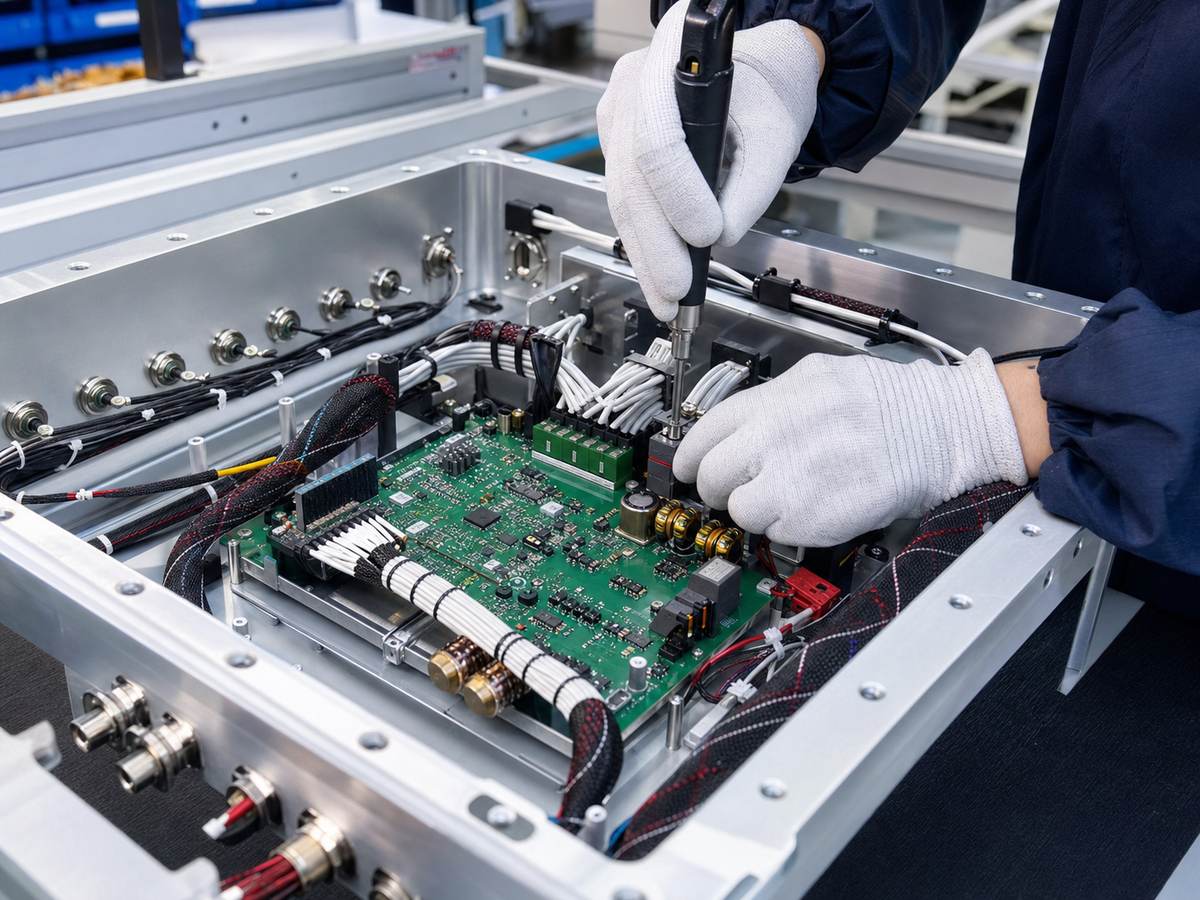
Box-Build Integration Engineer integrating a PCBA and cable harness into an industrial electronic enclosure
Box-build integration from mechanical assembly through final inspection.
3 linesPublished finished-product assembly lines, typically staffed by 15–20 people per line
Up to 1 × 1 mPublished large-format product integration support; handling and fixture access are file-reviewed
700 × 400 mmPublished selective or overall conformal-coating equipment window
15 yearsPublished MES record-retention period when included in the approved traceability route

Capability and acceptance matrix

Confirm Project Requirements Against Manufacturing Capabilities

Capability ranges and release conditions used during engineering review.
Capability areaPublished windowConfirmed before releaseTypical evidence when quoted
Enclosure integrationUp to 1 × 1 m product formatCAD, weight, access, tolerance, work sequence and safe handlingReleased assembly instruction and inspection status
Cable & harnessRouting, connector insertion, labeling, fastening and continuity checksDrawings, pin map, bend radius, pull/retention criteria and supply responsibilityHarness identity, route inspection and electrical result as agreed
Fastening & mechanicsScrews, brackets, heat sinks, gaskets, adhesives and thread-locking processesTorque values, tool control, cure conditions, sequence and cosmetic criteriaWork instruction, tool status and torque record where required
Conformal coatingUp to 700 × 400 mmMaterial, keep-out zones, coverage, thickness, cure and inspection methodCoating batch and coverage inspection result
Router depanelingUp to 800 × 400 mmPanel structure, thickness, support, stress-sensitive parts and edge criteriaReleased depaneling route and visual inspection
Programming & configurationFirmware, bootloader, parameter loading, calibration and version verificationReleased files, checksum, access, security, rework and ownership rulesUnit identifier linked to approved software revision when quoted
ICT / FCTBoard-level checks and custom finished-unit functional fixturesTest access, software, limits, fixture responsibility, maintenance and failure routePass/fail result, failure code and retest status as agreed
Cleanroom route100 m² ISO 7 (Class 10,000) cleanroom route, subject to process reviewApplicable assembly stage, cleanliness standard, clothing and handling requirementsReleased cleanroom instruction and inspection record
SerializationLaser-marked 2D code and MES-linked unit identityCode format, data ownership, scan points and customer data interfaceUnit history linking materials, firmware, test and release status
Final releaseFour-stage final inspection covering functional, mechanical, cosmetic, and packaging checksFunctional, mechanical, cosmetic, label, accessory and packaging criteriaFinal inspection and shipment-release status

Controlled integration route

Six Control Processes from File Review to Shipment

Cable harness routing and controlled fastening inside an electronic enclosure
Product assembly workflow from incoming parts through completed unit.
01

Files and Product Requirements

Review BOM, drawings, harness data, firmware, test limits, labels, packaging and volumes.

02

Incoming Material and Subassembly Inspection

Confirm supplied parts, enclosure condition, cable identity and controlled subassemblies.

03

Mechanical Integration

Release routing, fastening, thermal interfaces, adhesives, torque and work sequence.

04

Firmware & Configuration

Load the approved revision, verify identity and record configuration where required.

05

Test & Inspection

Run agreed unit-level functions and inspect mechanics, labels, accessories and cosmetics.

06

Serialization, Packaging, and Shipment Release

Link the unit record, complete final inspection and release the approved pack-out route.

Mechanical and process controls

Mechanical and Process Details to Confirm Before Final Assembly

01

Harness Routing

Connector keying, pin map, bend radius, retention, strain relief, label direction and interference checks are released from the approved harness package.

02

Torque and Fastener Control

Critical fasteners can be controlled by value, sequence, tool, thread-locking method and record requirement defined by the customer.

03

Thermal Interfaces

Heat sinks, pads, compounds, pressure surfaces and enclosure contact are checked against the mechanical drawing and work instruction.

04

Conformal Coating and Keep-Out Areas

Material, masking, coverage, cure, inspection and rework rules are agreed before the coating route is released.

05

Cleanroom Handling

Supported programs can use the published ISO 7 route after the applicable assembly stage and cleanliness evidence are confirmed.

06

Acceptance Standard

IPC-A-610, IPC/WHMA-A-620, IPC-CC-830 and customer drawings are applied only in the version, class and scope stated in the quotation.

Need the full commercial service route?This page proves capability boundaries. The service page explains scope ownership, quotation and delivery planning.
View Box Build Services

Test and release evidence

PCBA Inspection and Finished-Unit Testing

The quotation defines the inspection and test scope for the PCBA. Finished-unit functional testing is confirmed separately based on the product specifications and customer test requirements.

Board-level controlAOI, X-ray, ICT, flying probe or PCBA functional checks are selected from board risk and test access.
Finished-unit FCTPower-up, interface, communication, sensor, load, indicator and safety functions are released from the customer test specification.
Fixture controlDesign input, ownership, software, calibration, maintenance, spare parts and change control are agreed before production.
Failure & retestFailure codes, isolation, rework authority, retest rules and final disposition are part of the approved test route.
Final inspectionMechanical fit, cosmetics, labels, accessories, packaging and shipment release are checked independently of electrical pass status.

Review testing & inspection equipment →

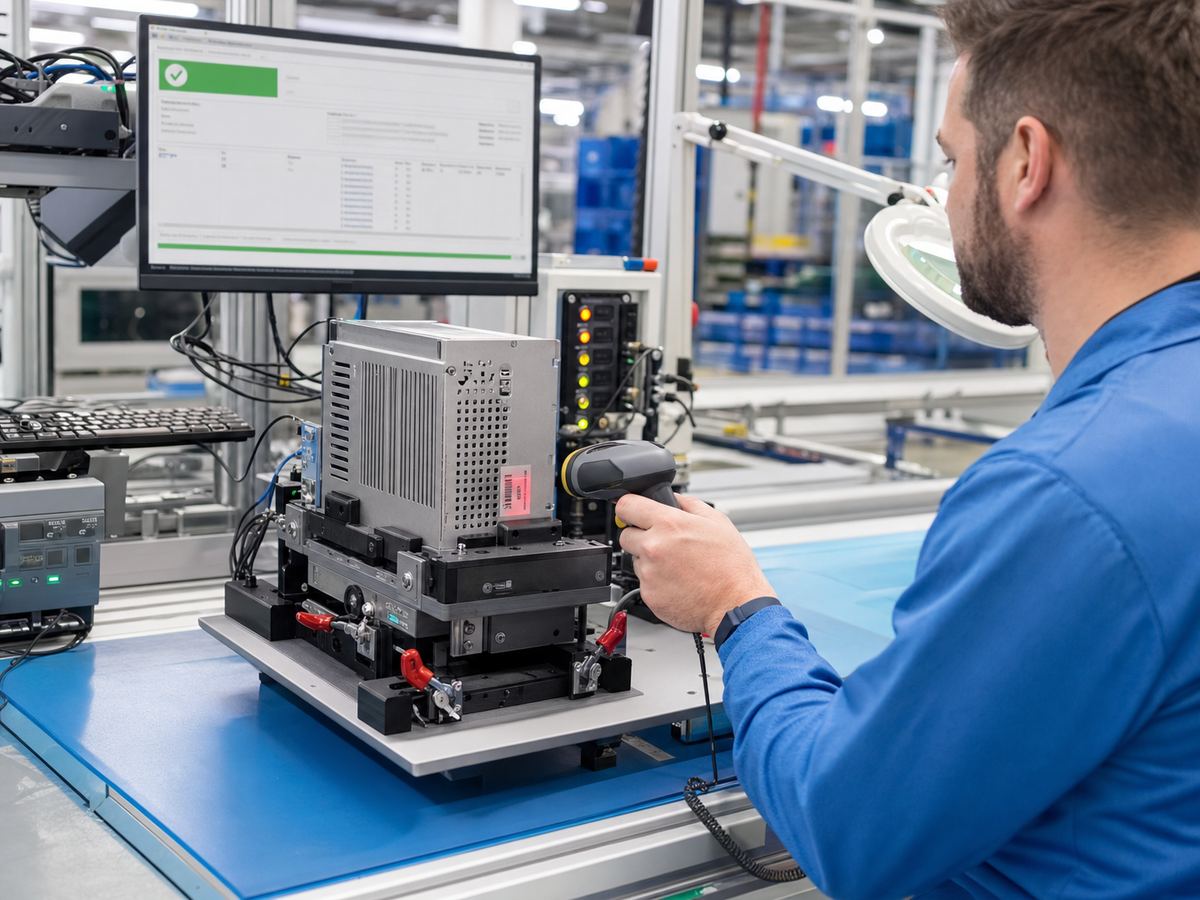
Finished electronic unit connected to a functional test fixture and serial verification station
Finished-unit functional testing with product-specific fixtures and software.

Unit-level traceability

Trace Every Finished Unit from Materials to Shipment

When included in the quotation, a laser-marked 2D code can connect each finished unit to the material, firmware, test, inspection and shipment records required by the program.

01Unit ID

2D code or customer serial rule

02Materials

PCBA lot, harness and controlled parts

03Configuration

Firmware, bootloader and parameters

04Test Result

Limits, pass/fail and retest status

05Inspection

Mechanical, label and cosmetic release

06Shipment

Pack-out and final release status

Representative build profiles

Manufacturing and Test Requirements for Different Product Types

Profile 01

Industrial Controller Integration

Inputs
Enclosure, harness, I/O map, firmware and functional limits
Review focus
Connector routing, thermal contact, configuration and interface test
Evidence
Unit ID, firmware revision, FCT and final inspection status
Profile 02

Controlled Cleanroom Assembly

Inputs
Cleanliness requirements, sealed parts, labels and pack-out criteria
Review focus
Applicable ISO 7 stages, handling, contamination and visual acceptance
Evidence
Released work route, inspection and traceability records as agreed
Profile 03

Large-Format Electronic Enclosure

Inputs
Full CAD package, weight, lifting notes, cable drawings and packaging plan
Review focus
Published 1 × 1 m format, work sequence, access and transport protection
Evidence
Released assembly route, final inspection and shipment status

Quote-ready package

Send the Available Files and Identify Missing Requirements

A first review can start with partial information. The quotation becomes reliable after both sides agree on the controlled inputs, acceptance evidence and supply responsibilities.

Email the Project Package
  • BOM and approved component requirements
  • PCBA manufacturing data and drawings
  • Mechanical CAD, enclosure and assembly drawings
  • Cable, harness, connector and pin-map files
  • Torque, adhesive and thermal-interface requirements
  • Firmware, configuration and calibration files
  • Functional test limits or golden sample
  • Labels, serial rules and traceability requirements
  • Packaging, accessories and cosmetic criteria
  • Prototype quantity and production forecast
01

First Response

Target within 24 hours: confirm receipt, NDA status and missing information.

02

Capability Review

Check physical envelope, supply process, process, fixture and acceptance risks.

03

Quotation Baseline

Confirm scope, schedule, fixtures, evidence, revisions and commercial responsibilities.

04

NPI & Release

Turn the approved package into pilot instructions, validation and repeatable production.

Confirm the Box Build and Test Route Before Placing a Production Order

Send your BOM, mechanical drawings, firmware notes, test requirements, and target quantities. EBest PCBA will identify missing information and confirm the applicable assembly, testing, traceability, and release process.

Box build capability FAQ

Questions Engineering, Procurement and Quality Teams Ask

These answers define the review process without turning file-dependent conditions into blanket promises.

What should I send for a box build capability review?
Send the available BOM, PCBA data, mechanical drawings, cable or harness drawings, firmware requirements, test criteria, labeling, packaging requirements and target quantities. EBest PCBA can identify missing inputs during the first review.
Can EBest PCBA link firmware versions and unit-level test results to each serial number?
Yes, when this traceability is included in the approved production process. Firmware, configuration, calibration, functional-test and final-inspection records can then be linked to a unit identifier.
Does EBest PCBA support functional test fixtures?
Yes. Fixture development and functional testing can be included after test access, limits, software, ownership, maintenance and release evidence are confirmed during quotation.
Can EBest PCBA provide cleanroom box build assembly?
Yes, for supported programs subject to process review. Published capability includes a 100 m² ISO 7 (Class 10,000) cleanroom route; product requirements and the applicable assembly stage are confirmed from the project files.
How are box build revisions controlled?
The approved BOM, drawings, firmware, work instructions, test limits and packaging requirements form the released baseline. Changes are reviewed for scope, schedule and cost before revised work proceeds.
Can I request an NDA before sending files?
Yes. Request the NDA first, then send controlled drawings, BOMs, firmware notes or test requirements through the agreed communication route.
Send Project Files