Skip to content
PCBA Assembly Capability

PCBA Assembly for Prototypes and Mass Production

Send your Gerber files, BOM, and placement data. We will check the SMT/THT process, inspection, testing, and traceability needs before quoting.

We aim to reply within 24 hours. Lead time, capacity, testing, and acceptance criteria are confirmed after we check your files.

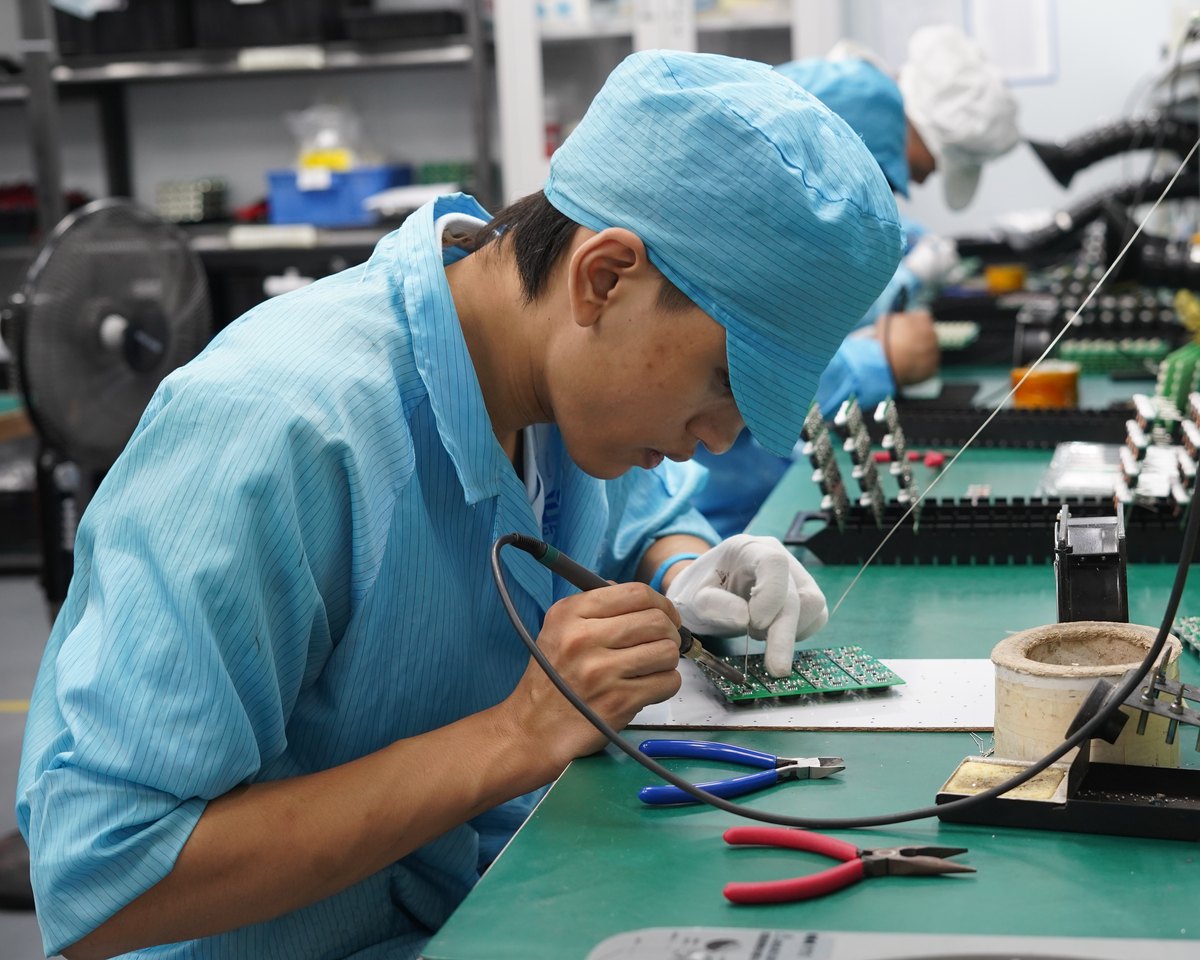
PCBA production engineers inspecting an assembled circuit board beside an SMT placement line
PCBA engineering review and SMT production.
01005 + BGApublished fine-pitch placement and 0.4 mm BGA reference
115,000 CPHpublished combined placement equipment rate
SPI / AOI / X-rayinspection routes connected to package and solder-joint risk
15-year recordstraceability retention on supported programs

Use these figures for a first check. Actual output and lead time depend on your board, components, quantity, and test needs.

Manufacturing capability matrix

PCBA Assembly Capabilities

Use this table to see whether your SMT, THT, BGA, inspection, testing, and traceability needs are within our stated capabilities.

Review ItemStandard CapabilityProject Requirements
Build modelFull-turnkey, partial-turnkey or consigned material.BOM ownership, approved sources, shortages, excess material and incoming inspection responsibility.
Volume routeNo MOQ; prototype, pilot and repeat builds across the published 1 pc to 100K+ range.Panel format, line loading, material status, inspection plan and schedule.
Assembly processSingle- and double-sided SMT, THT and mixed-technology assembly.Process sequence, heat-sensitive parts, hand operations, selective soldering and cleaning.
Component window01005 placement; 0.4 mm BGA is the standard public production reference.Land pattern, stencil strategy, component data, warpage, paste selection and X-ray route.
Board formatLong-format boards up to 1,200 mm can be processed, depending on board design and process requirements.Board width, thickness, tooling rails, panel support, conveyor path, fiducials and depaneling.
Assembly standardPublished IPC Class 2/3 support.Applicable revision, workmanship class, customer drawings, deviations and acceptance criteria.
Inspection3D SPI, 3D AOI, first article inspection and X-ray for hidden joints as specified.Coverage, sampling, measurement limits, defect disposition and report deliverables.
Testing and finishAvailable services include ICT, functional testing, firmware loading, serialization, and conformal coating for boards up to 700 × 400 mm.Test method, fixture, software, limits, coating keep-outs, cure route and ownership.
TraceabilityMaterial and process records retained for 15 years on supported programs.Required record fields, customer-facing reports, serial structure and retrieval route.
Does your assembly sit inside this window?Send the files you have. Engineering will identify the open capability and acceptance questions.
Check My Assembly
SMT, inspection and test equipment

Equipment for Placement, Inspection, and Testing

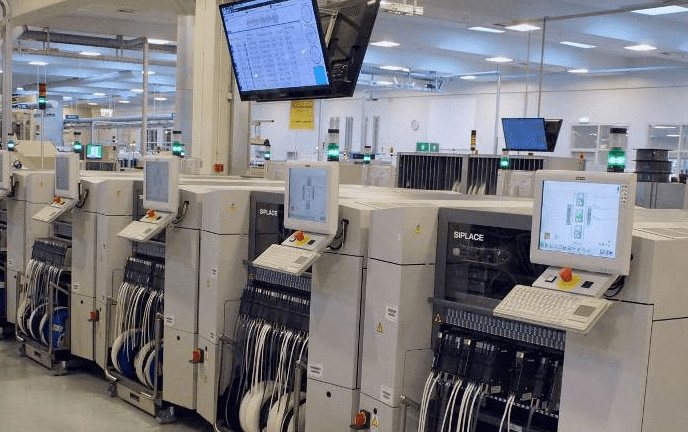
SMT placement equipment arranged on a PCBA manufacturing line
SMT PLACEMENT

Fine-Pitch Placement

01005 / BGA review

Placement accuracy, feeder plan, component mix and board support are confirmed from the actual files.

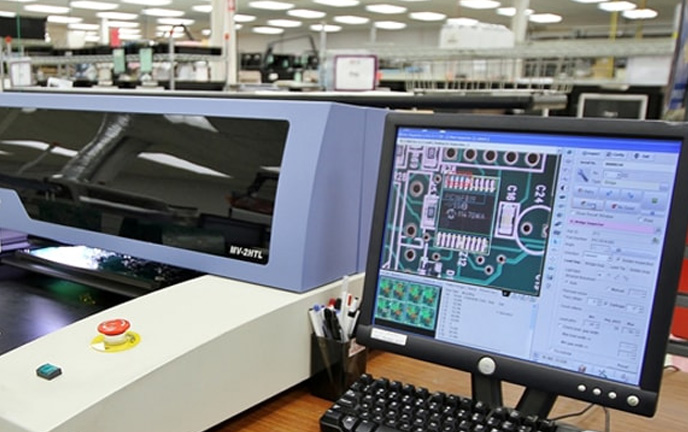
AOI inspection equipment reviewing an assembled circuit board
3D SPI / AOI

SPI and AOI Inspection

Paste and solder-joint control

SPI and AOI help verify paste, placement, polarity and visible solder conditions before release.

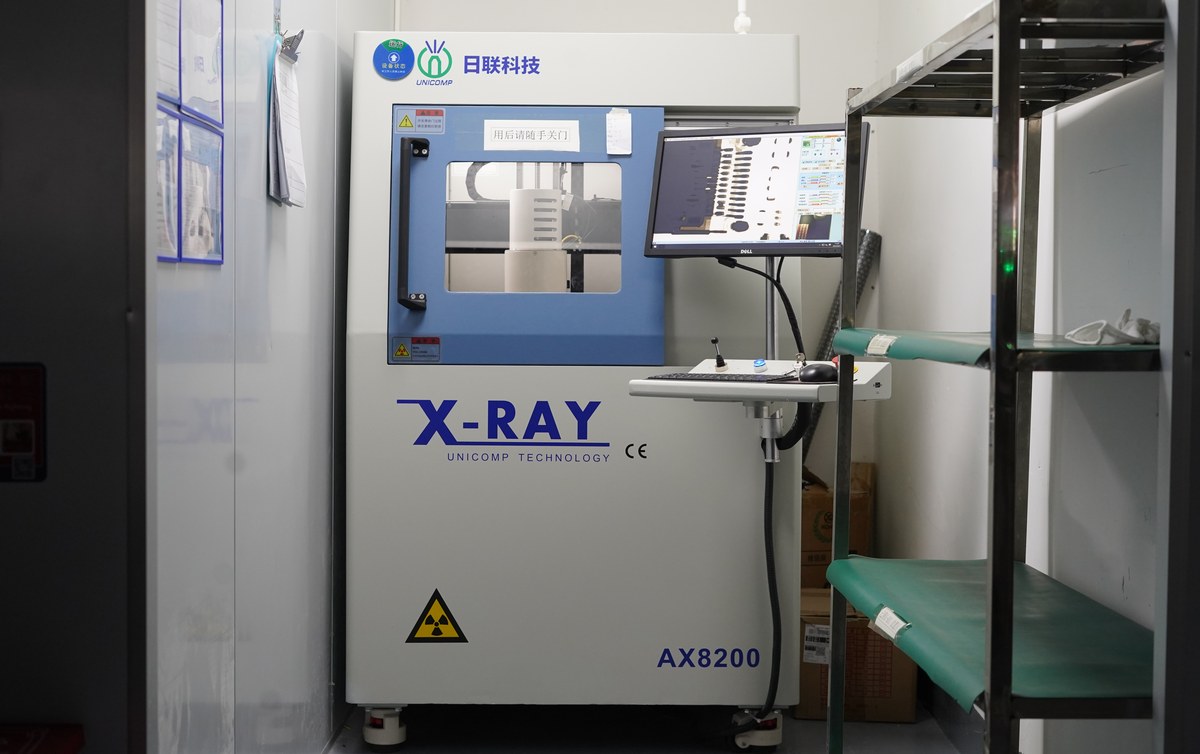
Engineer reviewing hidden solder joints with X-ray inspection equipment
X-RAY

Hidden joint inspection

BGA and bottom-terminated packages

X-ray is applied where solder joints cannot be fully confirmed by optical inspection.

Functional test setup for an assembled electronic product
ICT / FCT

Electrical and functional release

Fixture, limits and test ownership

Project-defined tests are confirmed with fixtures, software, limits and outgoing records.

Manufacturing route

From Files to Production

01

Files

Gerber / ODB++, BOM, centroid and drawings.

02

BOM

Turnkey, partial-turnkey or consigned model.

03

SMT / THT

Stencil, placement, reflow and hand operations.

04

Inspect

SPI, AOI, X-ray and first article evidence.

05

Test

ICT, FCT, programming or customer-defined route.

06

Release

Records, traceability and outgoing acceptance.

Review testing and inspection equipment
Repeat-build control

What We Record for Traceability

For supported projects, material and process records can be kept for 15 years. Tell us which records and compliance documents you need before production.

Review quality and traceability
01

Material identity

Approved source, lot, date code and receiving status where included in the program.

02

Process route

Records can include the program, production line, reflow profile, and inspection steps used for the order.

03

Inspection results

SPI, AOI, X-ray, first-article or test records according to the defined coverage.

04

Release identity

Work order, serialization, disposition and outgoing records tied to the accepted product route.

Representative build profiles

Four Common PCBA Manufacturing Types

These are representative capability profiles, not customer case studies or guaranteed outcomes. Final process and acceptance rules follow review of the actual files.

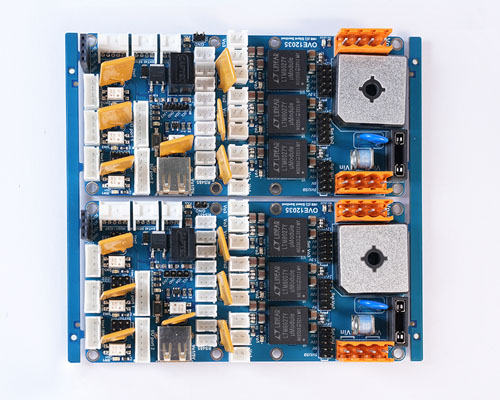
Representative long-life electronic control PCBA
01 / TRACEABILITY

Medical and long-lifecycle control PCBA

Stable BOM control, documented changes, inspection records and repeat-build discipline become the primary release concerns.

Review focus
Material lifecycle, records, change control
Likely evidence
FAI, AOI/X-ray plan, traceability set
Representative high-density power and control PCBA
02 / HIGH-DENSITY SMT

Fine-pitch and BGA assembly

Stencil, placement, reflow, hidden-joint inspection and component risk need to be reviewed as one process window.

Review focus
Fine pitch, BGA, thermal mass, X-ray
Likely evidence
SPI, first article, profile, X-ray
Representative mixed-technology industrial controller PCBA
03 / MIXED TECHNOLOGY

SMT and through-hole assembly

SMT and through-hole assembly combines automated and manual processes, including selective soldering, component polarity checks, mechanical support, and functional testing.

Review focus
THT, connectors, fixtures, manual steps
Likely evidence
Visual criteria, AOI, ICT/FCT, OQC
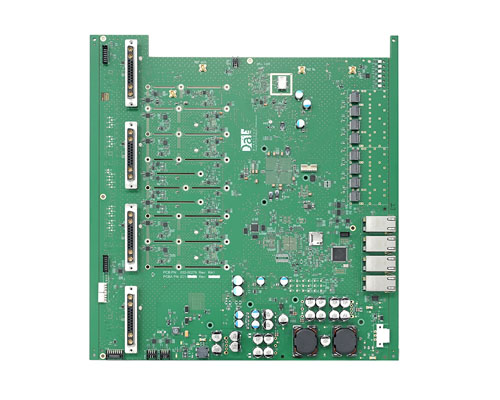
Functional testing station for released PCBA assemblies
04 / TEST RELEASE

Programmed and function-tested PCBA

Electrical tests, firmware loading, fixtures, limits and customer-defined acceptance rules are confirmed before release.

Review focus
ICT/FCT, firmware, fixture ownership
Likely evidence
Test record, limits, outgoing report
Quote-ready inputs

Send the Files You Have

We can start with partial files. Production starts only after the complete file set is approved.

01Board data

Gerber or ODB++, drill, stack-up and panel information.

02Assembly data

BOM, pick-and-place file, assembly drawing and special process notes.

03Commercial context

Prototype, pilot or repeat quantity, target schedule and delivery expectations.

04Acceptance requirements

IPC class, inspection, testing, traceability, coating, serialization and reports.

Engineering review before quotation

Check the Assembly Requirements Before Comparing Prices

Send Gerber or ODB++, BOM, placement data, quantities and test requirements. Partial information is enough to start identifying open questions.

FAQ

Questions Engineers and Buyers Ask Before Sharing PCBA Files

Final capability and acceptance decisions are based on the actual manufacturing package.

What files should I send for a PCBA capability review?
Send the available Gerber or ODB++ data, BOM, pick-and-place file, assembly drawing, target quantities, test requirements and any workmanship or compliance requirements. EBest PCBA can begin with partial information and identify what is still needed.
Can EBest PCBA assemble 01005 components and fine-pitch BGA packages?
Yes. We can place 01005 components and fine-pitch BGAs. Final approval depends on the land pattern, stencil design, component data, board design and inspection method.
When is X-ray inspection used for PCBA?
X-ray is used where solder joints are hidden or cannot be fully assessed by optical inspection, including BGA and other bottom-terminated packages. The exact sampling or inspection plan is agreed for the project.
Can EBest PCBA provide ICT or functional testing?
Yes, when the test method, fixture, program, limits and acceptance criteria are defined. Responsibilities and fixture costs are confirmed before production release.
Can customers consign components or use a partial-turnkey model?
Yes. Full-turnkey, partial-turnkey and consigned-material models are supported. BOM ownership, approved sources, incoming inspection and shortage responsibilities are confirmed during quotation.
How is repeat-build traceability maintained?
Supported programs can retain material and process records for 15 years. The exact record set and customer-facing deliverables are confirmed as part of the approved quality and traceability plan.