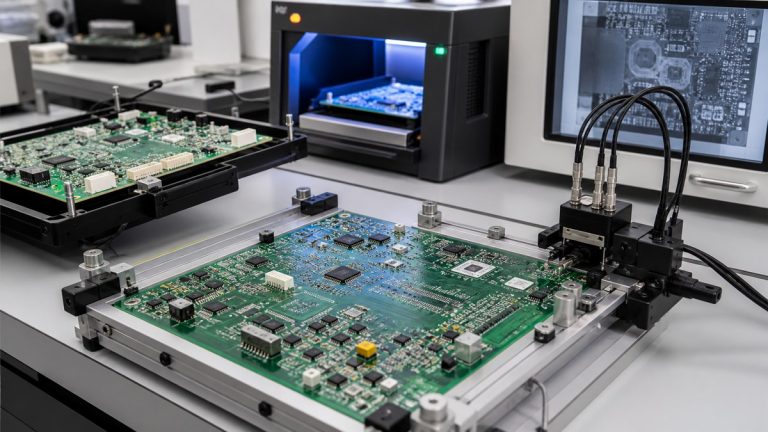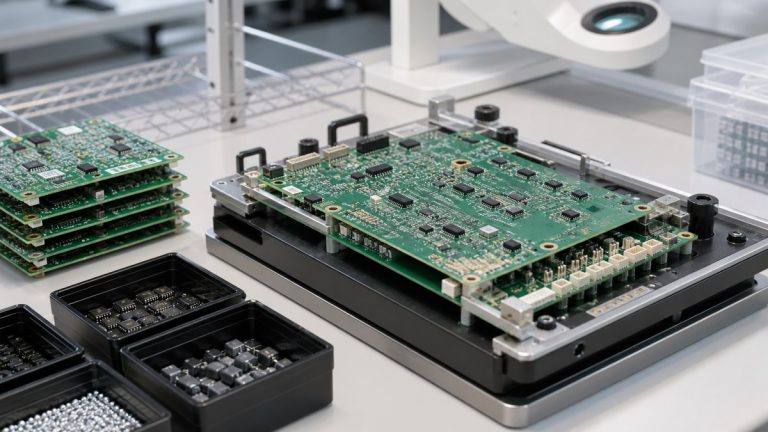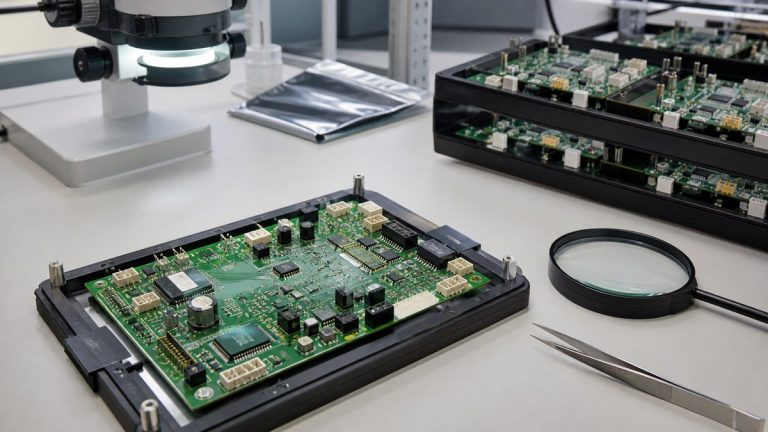
We control medical PCBA cleanliness and conformal coating as connected manufacturing processes. Before coating, our engineers review soldering materials, cleaning requirements, drying, handling, coating material, keep-outs, application, cure and acceptance criteria.
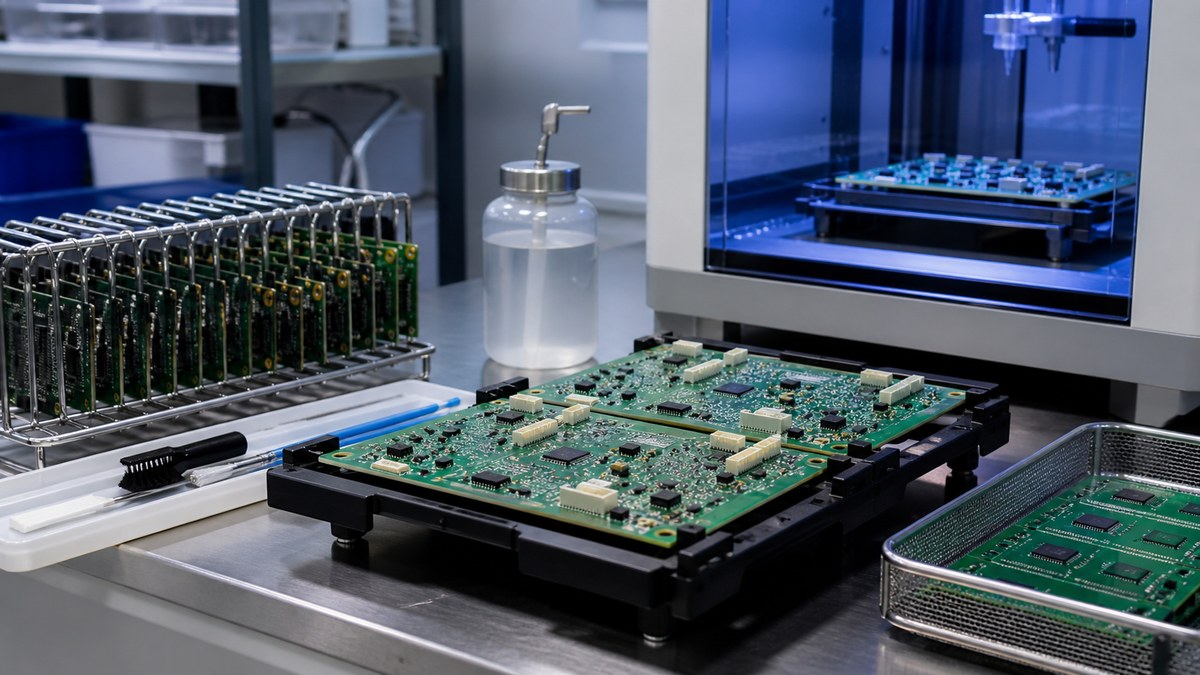
You receive a released process and evidence plan showing what is cleaned, what is coated, which interfaces remain protected and how the finished condition is inspected. We do not use coating to hide flux residue or an undefined surface condition.
Cleanliness and Coating Control Plan
| Stage | Our control | Evidence |
|---|---|---|
| Material review | Confirm flux, cleaning and coating compatibility | Released material basis |
| Cleaning | Define method, drying and handling | Applicable process record |
| Masking | Protect connectors, contacts, test points and interfaces | Approved keep-out instruction |
| Coating and cure | Control application, sequence and cure condition | Production lot record |
| Inspection | Verify coverage, exclusions and defined defects | Inspection result and disposition |
We Define the Required Surface Condition
We ask for the customer’s cleanliness specification, permitted residues, ionic or other test requirement, sampling, limit and report format. A visual statement that the board looks clean does not answer every contamination concern.
The requirement must match the soldering materials and product risk. We place the agreed cleaning and verification steps into the production route.
Cleaning Materials and Processes Must Be Compatible
We review flux chemistry, component sensitivity, labels, adhesives, connectors and coating compatibility. The cleaning method must remove the intended residue without damaging materials or leaving moisture in hidden regions.
Drying and controlled handling follow cleaning so the prepared surface does not become recontaminated before coating.
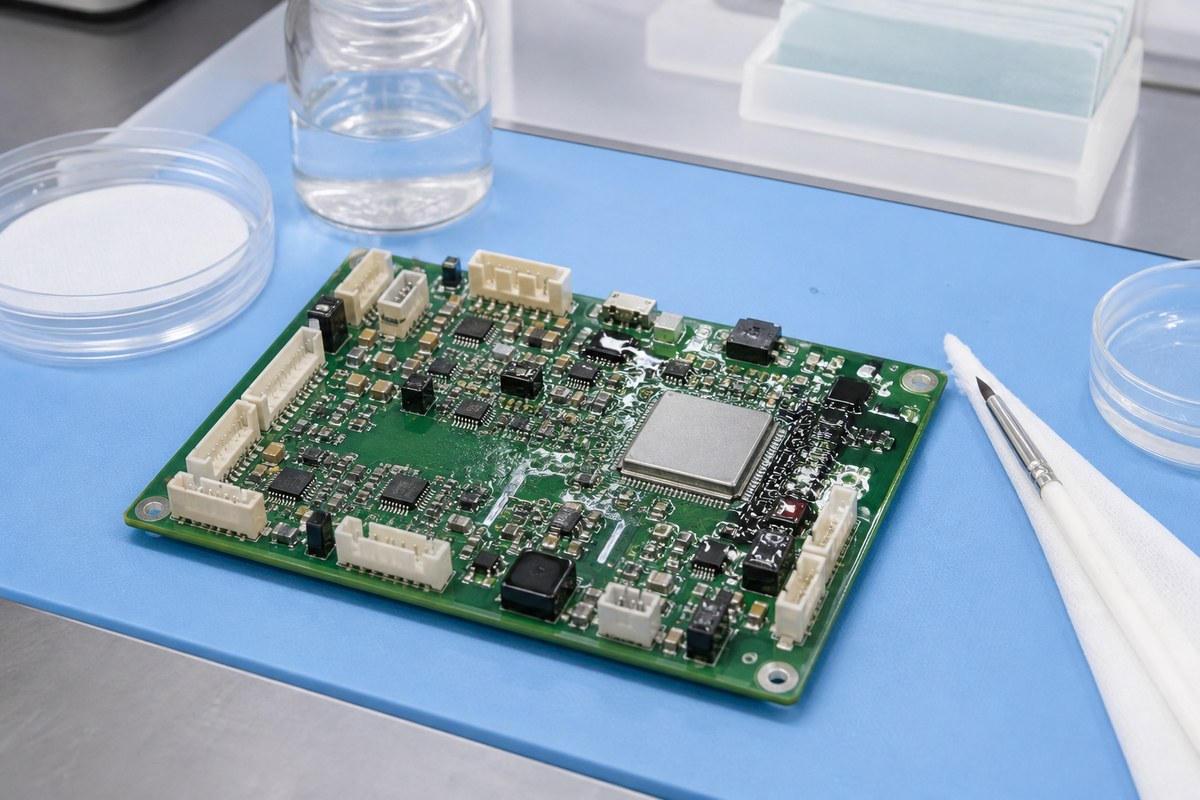
We Protect Coating Keep-Out Areas
Connectors, electrical contacts, switches, sensors, test points, heat-sink surfaces, grounding interfaces and adjustment features may require masking. We need clear drawings or dimensions for each exclusion.
The approved masking instruction becomes part of the product baseline. This reduces coating intrusion that can cause contact, fit or service problems.
Coating Material and Application Are Released Together
We confirm approved coating identity, preparation, application method, target coverage, thickness basis and cure. Board geometry, component height and shadowed regions affect orientation, fixtures and inspection.
Material substitutions require review for compatibility, processing, repair and product qualification effects before use.
Inspection Uses Defined Acceptance Criteria
We inspect the applicable coverage, keep-outs and defects using the method agreed for the coating, which may include visual, UV-aided or thickness evidence. Acceptance defines permitted edge conditions and unacceptable bubbles, cracks, bridging, dewetting or contamination.
The result and disposition remain connected to the production lot. “Coated” is not treated as a complete quality record.
Repair Requires Cleaning, Reapplication and Reinspection
If a coated assembly requires repair, we identify the location, use the approved coating-removal and repair process, clean as required, reapply the material and reinspect. Electrical retest is included where the repair route requires it.
The history remains visible so a local repair does not bypass final coating acceptance.
Coating Supports but Does Not Replace Product Protection
Conformal coating can reduce exposure to selected moisture and contamination conditions. It does not automatically make a medical device waterproof or satisfy enclosure, sterilization, biocompatibility, safety or lifetime requirements.
We provide controlled PCBA manufacturing evidence. The responsible medical-device organization validates the final product under its intended use conditions.
Why Medical Customers Use Our Process
We connect cleanliness, masking, material, application, cure and inspection around one approved assembly. Your team can review the process conditions and evidence instead of relying on a general coating statement.
This reduces contamination risk, blocked interfaces and inconsistent rework across repeat production.
Send Your Cleanliness and Coating Requirements
Send the BOM, assembly drawing, soldering materials, cleanliness requirement, test method and limit, coating material, coverage and keep-out drawing, thickness, cure, inspection criteria, sampling and report needs to sales@ebestpcba.com.
We will return the process questions, masking plan, proposed route and evidence available.
What We Need Before Coating Release
Tell us the coating material, required thickness or coverage, keep-out areas, cleanliness criterion, cure instruction and acceptance method. We will compare those requirements with the assembled board and proposed masking process. Your approved drawing and inspection criteria then become part of our controlled work instructions and lot records for the medical PCBA.