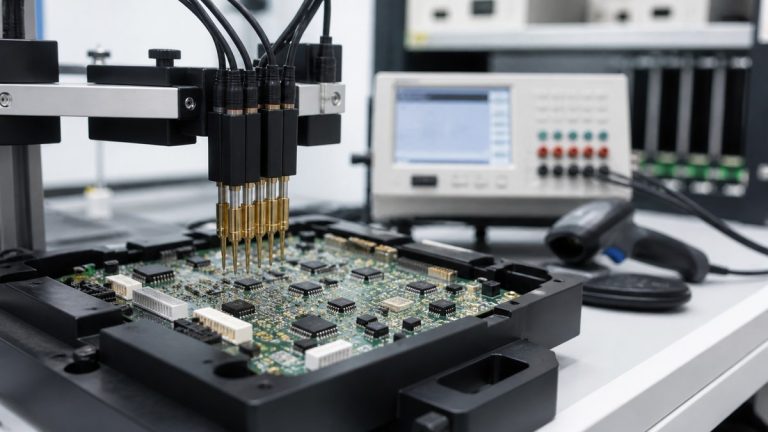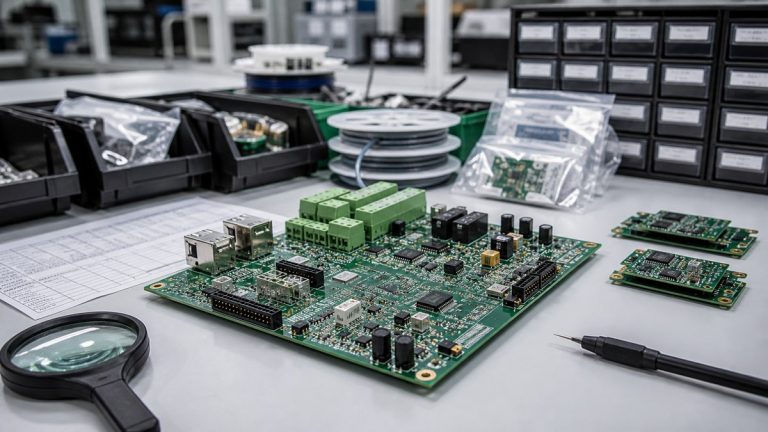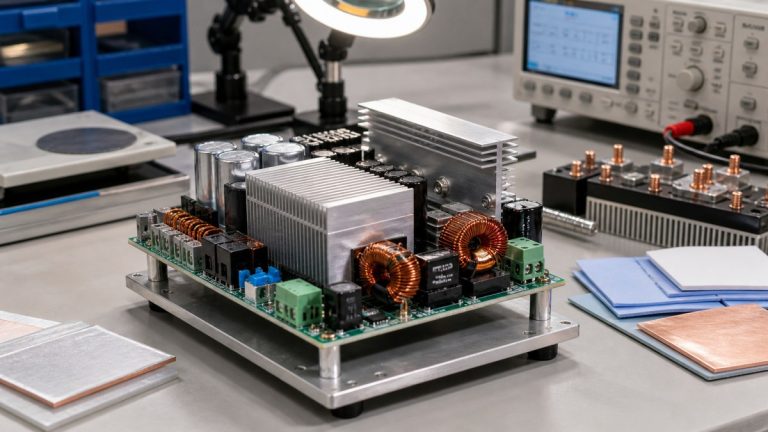
We apply conformal coating to industrial PCBAs when the product specification defines the material, coverage, exclusions, thickness, cure and acceptance requirements. Our engineers review the board, component interfaces, cleanliness needs, masking access and inspection method before coating enters the production route.
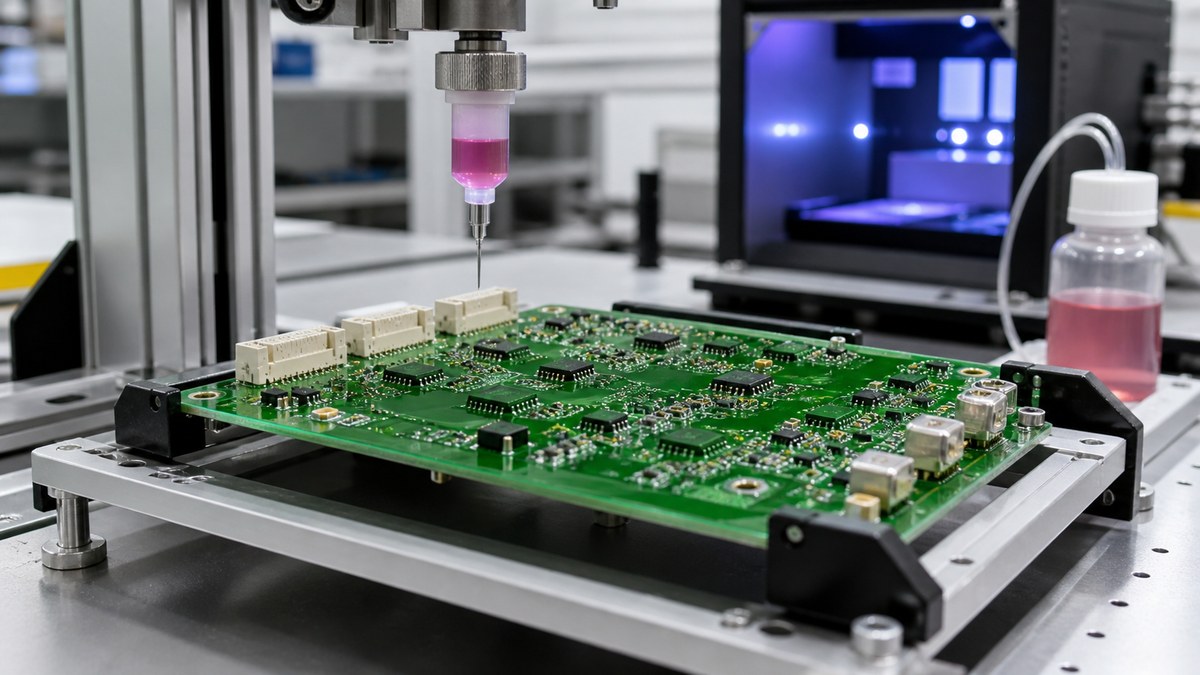
You receive a coating plan that shows what will be protected, what must remain uncoated and how the finished assembly will be verified. This prevents “apply coating” from becoming an uncontrolled instruction that blocks connectors, traps contamination or produces inconsistent coverage.
What We Define Before Coating
| Requirement | Our control | Evidence |
|---|---|---|
| Coating material | Record approved type and handling basis | Released material identity |
| Coverage | Define coated areas, keep-outs and masking | Approved drawing or work instruction |
| Cleanliness | Set pre-coating cleaning and handling route | Applicable process record |
| Application | Control method, sequence and cure | Production route and lot record |
| Acceptance | Define thickness, coverage and defect criteria | Inspection result and disposition |
We Match the Coating Requirement to the Environment
We ask for moisture, condensation, contamination, chemical, temperature and service conditions, together with the applicable customer specification. Different coating chemistries and thicknesses provide different processing, repair and protection characteristics.
Your team selects or approves the product-level protection requirement. We confirm that the specified coating can be applied and controlled on the released assembly.
Keep-Outs Are Part of the Product Definition
Connectors, contacts, switches, test points, heat-sink interfaces, adjustment features, sensors and mechanical grounding areas may require masking. We review drawings and assembly data to identify every exclusion.
The approved keep-out information becomes a controlled masking instruction. Clear dimensions and references reduce operator interpretation and make inspection repeatable.
Cleanliness Must Be Controlled Before Protection
Coating can trap flux residue, moisture, dust or handling contamination beneath the film. We review soldering materials, cleaning requirement, drying, handling and the time between cleaning and coating.
Where ionic cleanliness or another verification is required, the method, limit, sampling and record are agreed before production. Coating is not used to hide an uncontrolled surface condition.
We Control Application and Cure
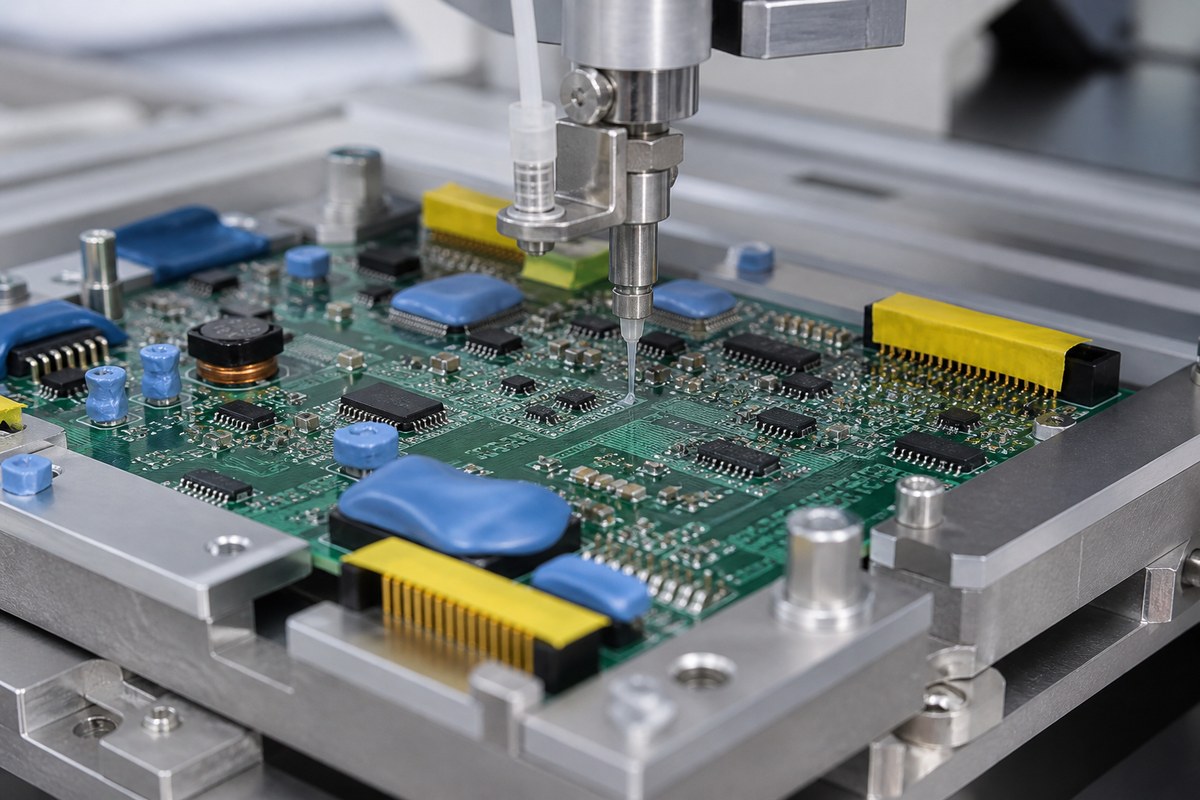
The application route may use selective, spray, dip or manual methods according to the product and approved process. We define material preparation, masking, application sequence, environmental conditions, cure and handling.
Complex board geometry can create shadowed areas, pooling or thin edges. Fixtures, orientation and inspection access are planned around those risks.
Thickness and Coverage Need Measurable Acceptance
“Full coverage” is not a complete acceptance rule. The requirement should define target areas, permitted edge conditions, thickness basis and unacceptable defects such as bubbles, cracks, bridging, dewetting, contamination or coating on excluded surfaces.
We use the inspection method agreed for the material and project, which may include visual, UV-aided or measurement evidence. Results and dispositions remain connected to the production lot.
Repair and Rework Stay Controlled
If a coated assembly requires repair, we identify the affected area, remove or prepare coating using the approved method, complete the authorized repair, clean as required, reapply coating and reinspect.
The rework record remains visible. This prevents a locally repaired area from bypassing coating acceptance or electrical retest.
Coating Does Not Replace Mechanical or Enclosure Design
Conformal coating can reduce exposure to certain environmental contaminants, but it does not make an assembly waterproof or solve every condensation, creepage, corrosion or enclosure problem. Product qualification must represent the actual environment.
We state this boundary clearly while providing controlled coating evidence for the manufacturing portion of the protection strategy.
Why Customers Use Our Coating Process
We connect material, cleaning, masking, application, cure and inspection to one released assembly. Your team can review exactly what was coated, how exclusions were protected and what result supported release.
This reduces coating damage to functional interfaces and improves repeatability across industrial PCBA orders.
Send Your Coating Specification
Send your BOM, assembly drawing, coating material, coverage drawing, keep-outs, thickness, cleaning requirement, environmental condition, cure requirement, acceptance criteria, sampling and report needs to sales@ebestpcba.com.
We will return the manufacturability questions, masking plan, process route and inspection evidence available.