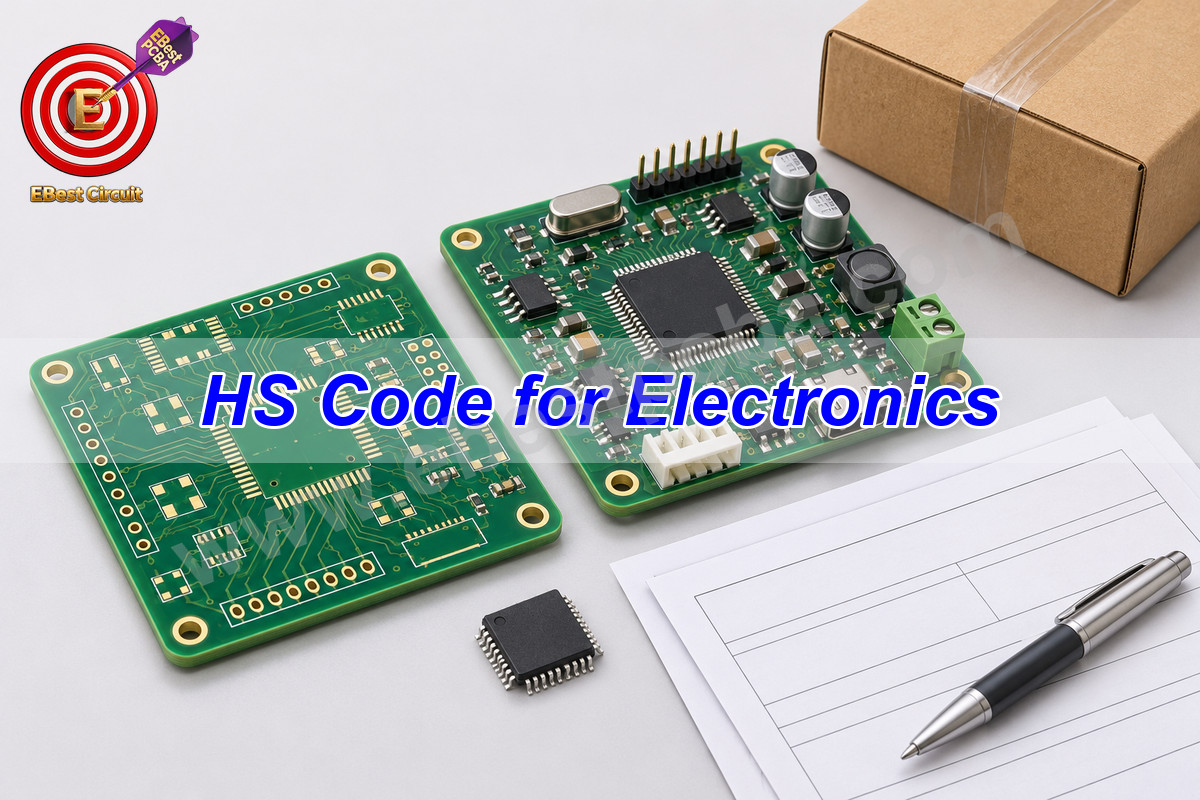
The right HS code for electronics depends on what you are shipping. A bare printed circuit generally starts at heading 8534 if it meets the legal definition. If chips and other components are already mounted, identify what the assembly does before choosing a code. Then check the full reporting number in the destination’s tariff schedule.
Key Takeaways
- Check heading 8534 for bare printed circuits that meet the legal definition.
- For an assembled board, document its function and what is fitted when it arrives.
- Use the destination’s current schedule to verify the full reporting number.
Is There One HS Code for All Electronic Products?
Start by separating the products on the packing list. A bare PCB, a populated controller and a complete power converter can all be made at the same factory and still require different tariff headings. The classification follows the goods as imported, including their construction and function.
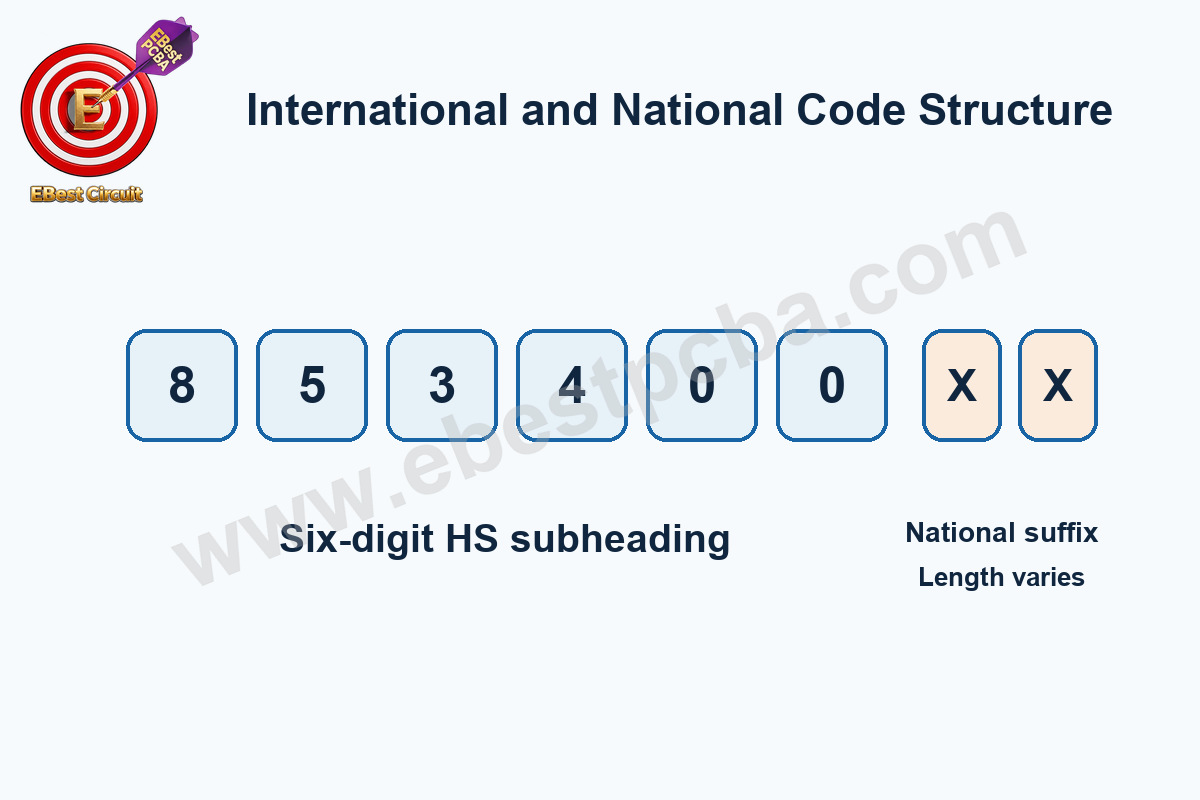
The first six digits identify the international HS subheading. A destination can add digits for tariff and statistical reporting. Use its current schedule to confirm the full number. A code on a supplier invoice is a clue to check against the actual shipment.
How Do a Heading, an HS Subheading and a National Code Differ?
Heading 8534 identifies printed circuits. The international subheading is 8534.00. A destination’s longer number can distinguish different board constructions. The example in the table comes from one U.S. ruling on one bare board.
| Level | Example | Use |
|---|---|---|
| Four-digit heading | 8534 | Check whether the article meets the printed-circuit definition |
| Six-digit HS subheading | 8534.00 | Identify the international classification level |
| National reporting number | 8534.00.0040 in U.S. ruling N336087 | Use only after confirming the destination’s current schedule and the specific product facts |
Read the heading and relevant section and chapter notes before comparing subheadings at the same level. Use the search results to find candidates, then check which legal descriptions fit the product.
Which HS Headings Should You Check for Electronic Components?
To find an HS code for electronic components, start with the part itself. A loose integrated circuit, a discrete semiconductor, and a populated PCB belong to different descriptions. Use the table to find candidate headings and check the destination’s notes for the selected goods.
| Goods as imported | Candidate heading | What to verify |
|---|---|---|
| Bare printed circuit | 8534 | Construction and whether any added elements are allowed under the printed-circuit definition |
| Electronic integrated circuit | 8542 | IC type and legal definition; a circuit board with ICs is not itself an IC |
| Discrete semiconductor device | 8541 | Device type and the relevant semiconductor subheading |
| Electrical switch rated at no more than 1,000 V | 8536 | Switching function, voltage and exact switch type |
| Standalone static converter | 8504 | Whether the imported unit performs static conversion and which converter type applies |
| Populated PCB assembly | Depends on function and legal notes | Whether it is described by a heading in its own right or qualifies as a part of another machine |
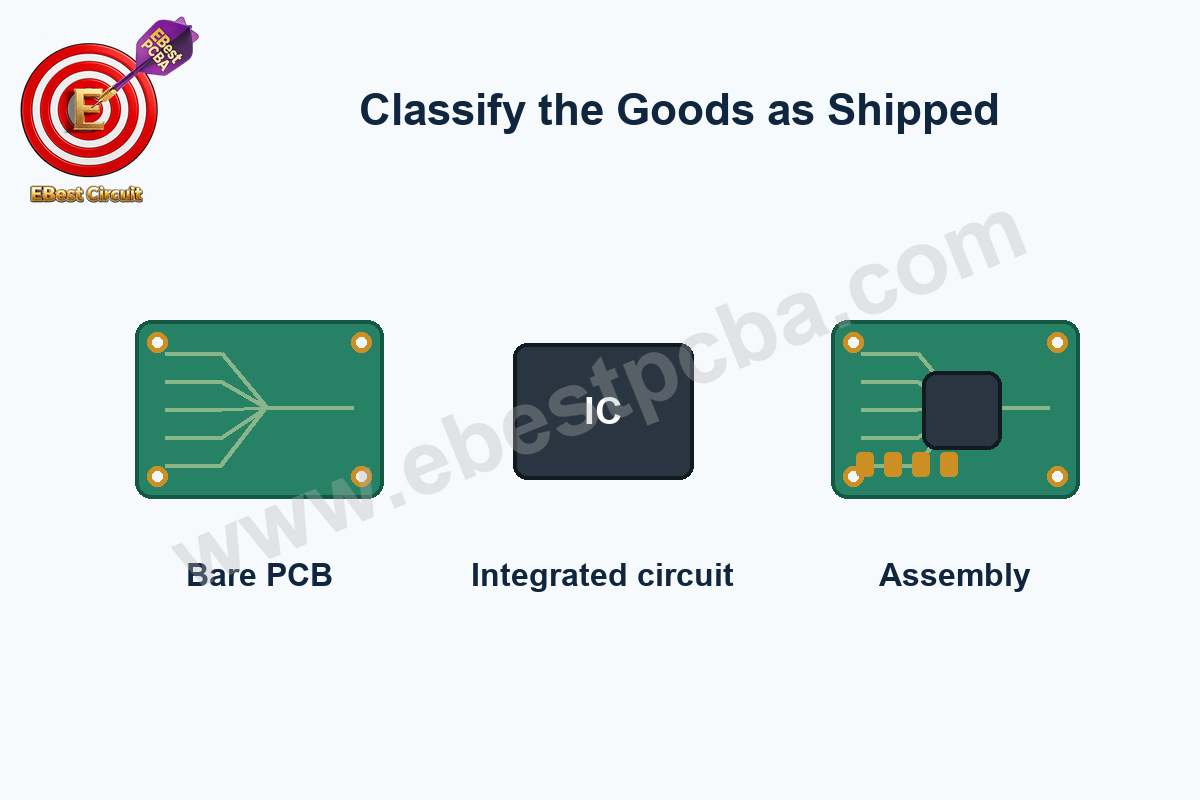
When checking the HS code for electrical switches, write down the switching function, voltage and contact type. For an electronic converter, establish whether the shipment is a functioning converter or a board for later assembly. The answer can change which heading or parts provision you need to check.
When Can a Bare PCB Fall Under Heading 8534?
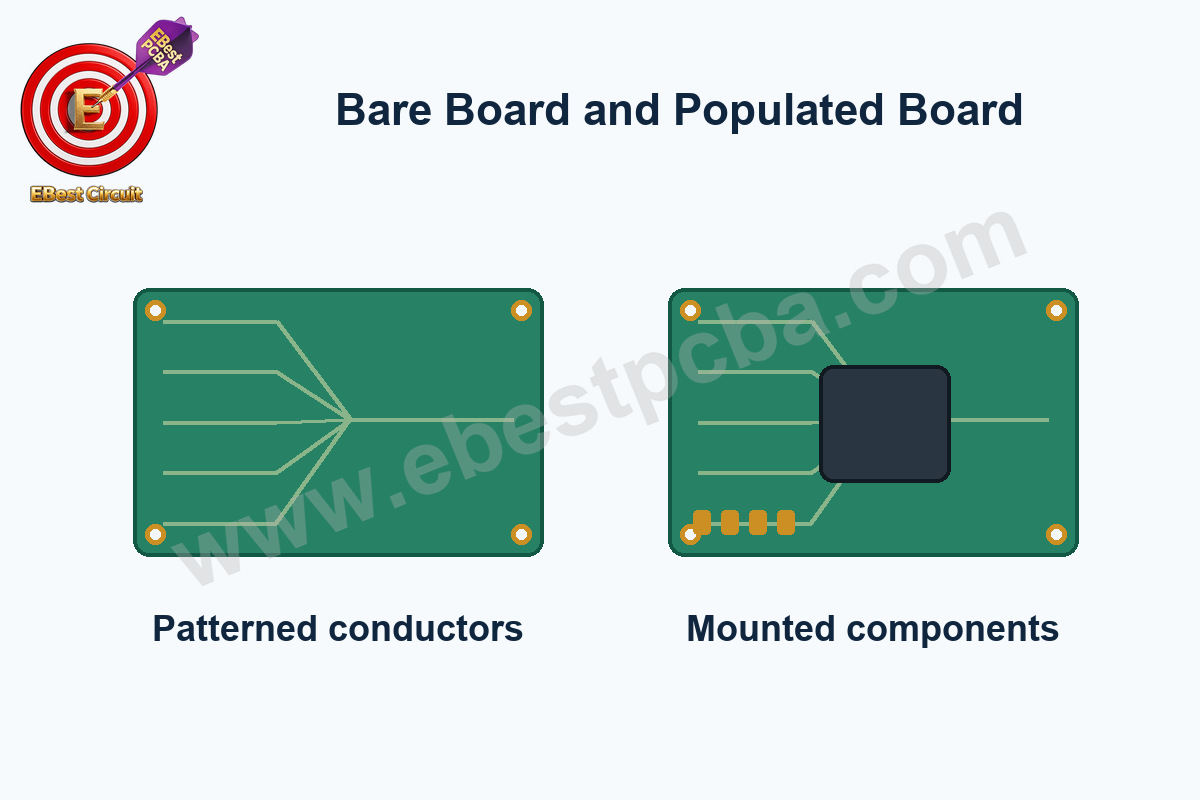
A bare board may fall under heading 8534 when it meets the printed-circuit definition. The legal note allows certain non-printed connecting elements. Document the actual items fitted to the board before deciding. A board with mounted electronic components needs its own analysis.
CBP ruling N336087 concerned a specific unpopulated rigid FR-4 board. N359330 concerned a populated controller dedicated to a medication system. CBP treated those goods differently. Compare the facts in the ruling with your own part before using it as support.
What Product Facts Can Change the Result for an Electronic Assembly?
Take a populated power-supply board and a finished converter. The board may need more parts before it performs its intended function. The finished converter may already accept input power and deliver the specified output. Confirm what each item does when imported, then read the relevant heading terms and any parts provisions.
| Scenario | Evidence to collect |
|---|---|
| Rigid FR-4 board with etched copper and no mounted devices | Stackup, layers, substrate, photos and whether connecting elements are fitted |
| Populated controller built for one host machine | Exact host, board function, firmware state, and whether the board is dedicated or general-purpose |
| AC-to-DC converter shipped as a functioning unit | Input/output ratings, conversion function, enclosure and what is supplied |
| Power-supply board shipped for later assembly | Which functions are present on import and which parts or stages are added later |
In ruling N359330, the board arrived fully populated and programmed, required no further assembly and was dedicated to the stated medication system. If your controller serves different machines or is shipped in a different condition, document that difference before applying the ruling as evidence.
How Do You Look Up the Correct National Tariff Code?
Start with one SKU and a description of how it arrives. Use a drawing or photo for construction and a functional description for what it does. Compare those facts with the tariff schedule, then record the final decision with the date and supporting evidence.
- Record the exact model, condition as imported, electrical function, construction and whether the item operates on its own.
- Read the headings and applicable section and chapter notes. Check parts rules where the board is designed for another machine.
- Compare candidate subheadings in the current destination tariff schedule and confirm the full reporting number.
- Review official rulings with matching facts. If a consequential ambiguity remains, seek a binding ruling from the competent authority.
- Align the approved description with the invoice, packing list and product documentation. Check duty treatment, origin and additional measures separately.
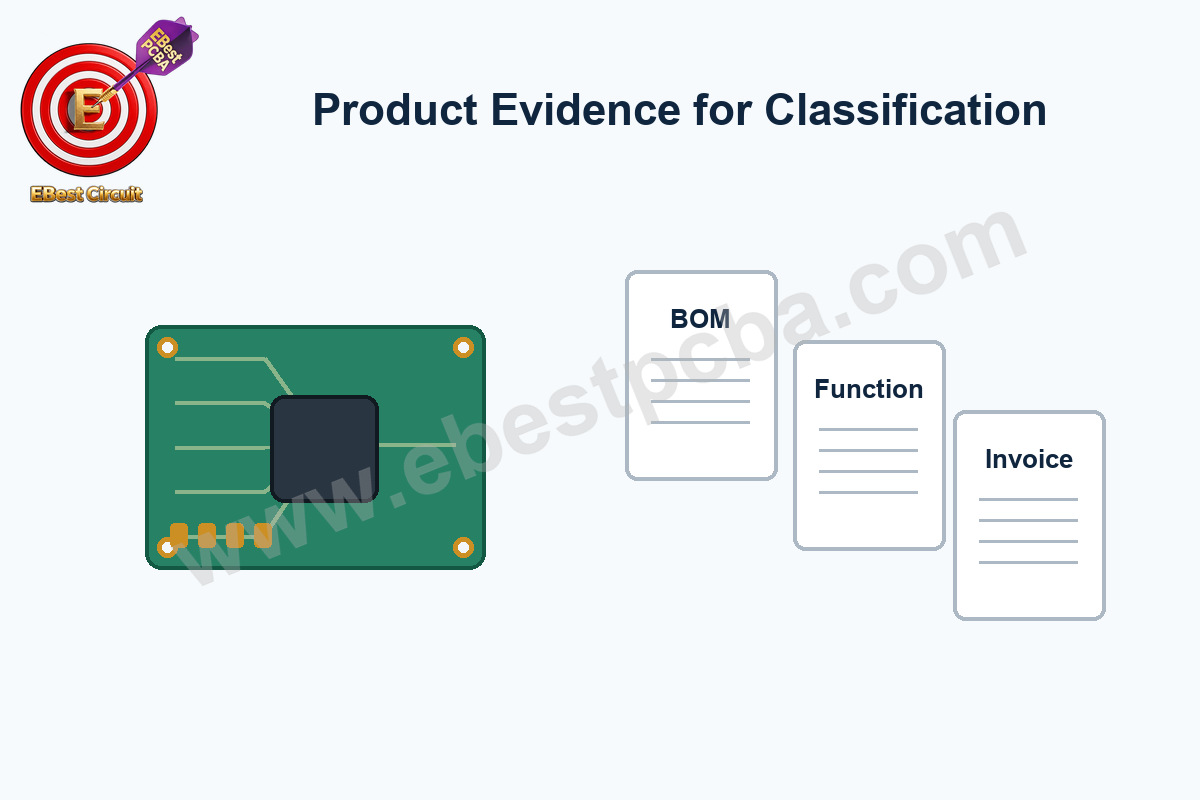
For PCB shipments, show both sides of the board and state whether it is populated. If someone has asked for an HS code for electrical items, break the request into specific goods such as bare boards, switches and assemblies before assigning any numbers.
How Do You Prepare a Classification Record for Repeat Shipments?
Keep a record for each shipped configuration. Save the board revision, photos, function, destination and approved code. Note which facts made the chosen heading fit. That gives a colleague enough information to check the decision when the board or destination changes.
- Identify the SKU and revision as imported. Save dated photos and the BOM or a summary of populated components.
- Describe the actual function in plain language, including input/output ratings and the host device where relevant. State what is supplied separately.
- Record the destination, schedule revision, legal notes and any ruling considered. Separate the six-digit classification from the full reporting number.
- Have the responsible customs reviewer confirm the number and invoice wording. If seeking a binding decision, supply a full description and supporting facts rather than only a product name.
- Recheck the record when a bare board becomes populated, firmware changes a function, a converter is shipped as a complete unit or a destination tariff schedule changes.
An invoice can say “rigid FR-4 printed circuit board, two copper layers, no mounted electronic components” if that is what arrives. For a populated assembly, describe its role, such as a controller for a named machine, and keep the same wording across the supporting documents.
What Product Details Can EBest PCBA Provide?
For bare PCB fabrication and PCB assembly, we can confirm which board configuration was manufactured and what is included in the shipment. Give the importer or customs adviser the matching part number, revision and description to review against the destination schedule.
The examples draw on the WCO Harmonized System FAQ, USITC Harmonized Tariff Schedule Chapter 85, and CBP rulings N336087 and N359330.
Frequently Asked Questions
What is the HS code for PCB boards?
Start with heading 8534 for a bare printed circuit that meets the chapter definition. A populated PCB assembly needs a classification based on the actual article. Verify the destination’s full reporting number before filing.
Can I use the supplier’s export code on my import declaration?
Check the international subheading and the destination’s full reporting number. The supplier may use a different national suffix. Confirm that the product description also matches the goods as imported.
Does a control board automatically use heading 8537?
Check the heading terms and legal notes against the specific board. Identify the devices fitted, the control function and whether the goods are imported as an apparatus or a part.
Does an HS code tell me the country of origin?
Classification identifies the kind of goods. Determine origin under the applicable origin rules and check any origin-related measures separately.
Do I need to review a code used on a previous shipment?
Review it if the board, shipment configuration, destination or tariff schedule changes. Compare the current goods with the facts used to approve the earlier code.
What if the invoice description is too broad to support classification?
Ask for the part number, board revision, photos and a description of the function and mounted components. Update the invoice wording once the description and classification have been confirmed.